TIMELINE
COLEORTON RAILWAY
(AN EXTENSION OF SWANNINGTON & LEICESTER RAILWAY)
FURTHER INFORMATION CAN BE FOUND IN THE PUBLICATION A HISTORY OF THE COLEORTON RAILWAY

1820's

SIR GEORGE HOWLAND BEAUMONT, CHIEF FINANCIAL BACKER OF RAILWAY
Sir George Howland Willoughby Beaumont, 8th baronet of Stoughton, inherited the Coleorton estate from his cousin Sir George Howland Beaumont, 7th baronet of Stoughton in 1827. Sir George, as the chief financial backer, was responsible for the promoting and building of the railway on land mostly owned by himself. He was the major shareholder, holding 109 of the 340 shares and contributing £5,500 of the total £15,240 raised for the project. Ironically, most of the Land on which it was built was not within the Parish of Coleorton
Mar 1830

BILL PRESENTED TO PARLIAMENT
Bill for the building of the railway was presented to Parliament by Sir George.
20 Nov 1832

PROJECT OFFICIALLY ANNOUNCED
10 Jun 1833
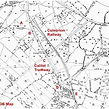
EXTENSION TO BE KNOWN AS 'COLEORTON RAILWAY'
The Leicester to Swannington Railway obtained the Act of Parliament for the building of the extension to that railway, from Swannington Incline to be 'known as 'Coleorton Railway'
31 Mar 1833

RAILWAY EXTENSION CONFIRMED
The Coleorton extension of the Leicester to Swannington Railway from Swannington Incline to Worthington Rough was officially confirmed
1833/4

NOWELL & SONS APPOINTED AS MAIN CONTRACTORS
Messrs Nowell and Sons were appointed as main contractors for the railway including the 480 yard Pegg's Green tunnel
1834

AQUEDUCT BRIDGE BUILT
A substantial Sandstone bridge on Aqueduct Road was built by Nowell and Sons. The Walls of this bridge still survive today
1833-34
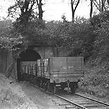
BRICK TUNNEL BUILT THROUGH RAILWAY EMBANKMENT TO ALLOW ENGINE BROOK TO PASS THROUGH
A small diameter walk through the brick tunnel was built through the embankment at the bottom of Zion Hill to allow the brook originating from near Coleorton Bug and Wink colliery via the Coleorton Fish Pond, to pass through. This is still in existence today. That part of the brook was recorded as engine brook which relates to an adjacent mining pump which deposited mining water into the brook

COLEORTON BRICKYARD SUPPLY BRICKS MAINLY USED FOR PEGGS GREEN TUNNEL
868,000 bricks were supplied from Coleorton brickyard (owned by Sir George Beaumont), to be mainly used for the building of the 480 yard long Pegg's Green tunnel. This was later filled in for safety reasons and to hopefully prevent future subsidence, the latter not being the case
Winter of 1832/33
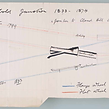
PLANS DRAWN UP
Samuel Harris drew up plans for the railway for submission to Parliament.
Aug 1833-Feb 1835
c. 1834

NEWBOLD TUNNEL BUILT
A 90 yard long Newbold Tunnel was built to allow the railway to extend to Worthington Rough and then on to the pits in the Smoile
1835

PAYMENT TO NOWELL & SON
Record for Nowell and Son / Thomas Platts being paid for fencing , hedging and dykeing along the route.
1840

CLOUD HILL QUARRY LINK WITH COLEORTON RAILWAY COMPLETED
Rib edge railway from Cloud Hill quarry to link with the Coleorton Railway in the Smoile completed. This was for the transportation of burnt limestone from the quarry.
1843

RAILWAY INN BUILT ADJACENT TO COLEORTON RAILWAY
Railway Inn (now Gelsmoor restaurant) was built adjacent to the Ashby to Rempstone turnpike road which crossed the Hinckley to Melbourne turnpike near this point. It was also adjacent to the Coleorton Railway. A goods transport Wharf there was run by George Crabtree, landlord of the Railway Inn from 1843 to 1889
Late 1840s/ Early 1850s

SHORT BRANCH LINES ADDED
Short branch lines to Coleorton railway were added to take coal from Pegg's Green colliery, California Colliery at Pegg's Green, Calcutta colliery and Califat colliery in order to try and increase the profitability of the railway
1862

COLEORTON RAILWAY EXTENDED
Coleorton Railway was extended to another coal shaft / coalmine in the Smoile in order to try and increase traffic over the financially failing line
Early 1870s

COLEORTON RAILWAY CLOSED
Railway closed due to insufficient traffic using it. The Coleorton railway proved to be a financial disaster over its lifetime.