TIMELINE
COLEORTON - 1700 TO 1900's
FURTHER INFORMATION CAN BE FOUND IN THE PUBLICATIONS ON THE 'EVOLUTION OF COLEORTON'
CLICK ON THE UNDERLINED BLUE TEXT IN THE TIMELINE DESCRIPTIONS TO FIND OUT MORE

1753-1966

ANGEL INN
The Angel Inn was almost certainly built as a farm house originally and has been one of the centres of Coleorton social life for well over 200 years
1753-1881

QUEENS HEAD
The original Queens Head building may have been an 18th century farm house where a room was provided for the sale of Ale. It was occasionally referred to as the "Old Queen's Head Inn", presumably due to its considerable age, traced back to 1753 as an "Ale House", when John Potter was the victualler.

1798

SIR GEORGE BEAUMONT LAW SUIT
Sir George Beaumont brought a successful law suit against Joseph Boultbee Junior for systematically swindling him during his management of Beaumont's Coleorton coal mines.
1802

SIR GEORGE BEAUMONT VISIT TO COLEORTON
Visit to Coleorton by Sir George Beaumont (7th Baronet) and his wife Lady Margaret with the intention of returning to his inheritance and rebuilding the Manor House into what is now Coleorton Hall.
1804

SIR GEORGE HOWLAND BEAUMONT RETURNS TO COLEORTON
Sir George Howland Beaumont returned to Coleorton from the Manor House in Dunmow to re-build the old Manor House at Coleorton. The first stone for the present Coleorton Hall was laid on 21st Aug 1804 and first inhabited on the 12th Aug 1808 by Sir George and his wife Margaret. The architect was George Dance
1806

WORDSWORTH VISIT TO COLEORTON HALL
Wordsworth's visit to Coleorton Hall to design the Winter Gardens
1809

BENJAMIN ROBERT HAYDON & DAVID WILKIE VISIT TO COLEORTON HALL
The visit of Benjamin Robert Haydon and David Wilkie to Coleorton Hall
1816
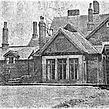
COLEORTON'S 2ND RECTORY BUILT
Coleorton Rectory, largely financed by the Rev. Francis Merewether and constructed by John Gadesby of Coleorton. Construction started in 1816 and continued over a number of years.
c.1830

BEAUMONT ARMS
The Beaumont Arms was originally a farmhouse which also served as an Ale House in its beginnings
1839-1901
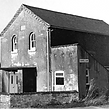
COLEORTON PRIMITIVE METHODIST CHAPEL
The original Coleorton Primitive Methodist Chapel was erected in 1839, and was situated at the end of Chapel Lane where it meets Lower Moor Road
1855-1873

COLEORTON No.2. COLLIERY OPENS
In 1855 Worswick & Walker sank a large colliery known most commonly as Califat, but was given the official name of Coleorton No.2 Colliery. A tragedy occurred at Califat in 1863 and although the colliery was re-opened output declined and the colliery was closed on 1873.
1849-1873

COLEORTON No.1. COLLIERY OPENS
The Coleorton No. 1 Colliery was sunk in 1849 by Benjamin Walker and William Worswick, on land leased from Sir George Howland Beaumont, 9th Baronet of Stoughton.
Mid1850s-1861

THE BLACKSMITH ARMS
The Blacksmiths Arms Beer & Wine House was an 19th century building located originally within an area in Coleorton, formerly known as "Rotten Row".
1856

ST. JOHN'S MORTUARY CHAPEL CORNER STONE LAID
The Corner Stone of St. John's Mortuary Chapel was laid.
Mid 1700's-Mid 1800's

PACK HORSE INN
The Packhorse Inn was likely given its name from the nearby pack horses and ponies driven by Hawkers taking coal from local coal pits to the surrounding districts.
c.1825 - post 1936

ROSE & CROWN/GEORGE INN
The historical George Inn still occupies a prominent position on Loughborough Road, Coleorton although much changed now from the original building in the days before it was named the “Rose & Crown” and was an Ale House
1857

CONSECRATION OF NEW CEMETERY AT COLEORTON
Consecration of new cemetery at St. John's Mortuary Chapel, Coleorton.
1867

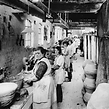
VISCOUNT BEAUMONT C OF E SCHOOL BUILT
The Viscount Beaumont Church Of England school was built at the expense of Canon William Beresford Beaumont. It is currently one of the oldest surviving schools in the area.
1891-1925

LEASING OF COLEORTON HALL
The leasing of Coleorton Hall by the Donisthorpes and Abel Smiths.
Pre 1900

COLEORTON POST OFFICE ESTABLISHED
New Kendrick's Post Office on Lower Moor Road established.
1901-2012
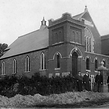
NEW COLEORTON PRIMITIVE METHODIST CHAPEL OPENS
The new Coleorton Primitive Methodist Chapel was built on adjoining land to the original Chapel, and it was ready for use in 1901

1922

COLEORTON WAR MEMORIAL ERECTED
The War Memorial was erected next to the Alms Houses in the centre of the road and later relocated to the the bottom of Church Hill at the entrance to Farm Town Lane.
1923

SIR GEORGE BEAUMONT MARRIES
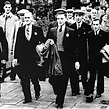
George Arthur Hamilton Beaumont (11th Baronet) marries Miss Renee Muriel Northey.
Pre1938

SINGLE TRACK TURNPIKE ROAD BRIDGE REPLACED
The single turnpike track road bridge (now Ashby Road) over the fish pond was taken down stone by stone and replaced with a more substantial design to accommodate increased traffic volumes.

Early 1900s
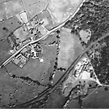
LOUNT PIPE WORKS OPENS
The Pipe Works (within Coleorton boundary) were thought to have opened in the early 1900s, and they were initially owned by the "Lount Brick and Sanitary Pipe Company".
1852-1923

COLEORTON BEAUMONT CRICKET CLUB
The Coleorton Beaumont Cricket Club was clearly named after the Coleorton Hall Beaumonts'. Sir George Howland Beaumont (9th baronet) and the Rev. W. B. Beaumont played in the 1852 team. The earliest record found for the cricket is 1852 and the last in 1923. However, there is reference at a Cricket Club dinner in 1894 to the club being in existence for nearly fifty years, suggesting it may have been formed c.1845.
1813

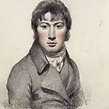
COLEORTON BRICK WORKS ESTABLISHED
Sir George Beaumont established the Coleorton Brick Works and a significant volume of bricks and other products such as drainage tiles were made there.
1867

ALMS HOUSES BUILT
Coleorton Hospital and School demolished and Alms Houses built for village widows on the same site.
1838-1882

MONTGOMERY HENDERSON - HEAD GARDENER AT COLEORTON HALL
The 9th Baronet's head gardener was Montgomery Henderson who came to work at Coleorton Hall in 1838. He was born in1808, in the village of Swanston, at the foot of the Pentland Hills, near Edinburgh
c.1820 - 1904
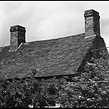
THE OLD ENGINE INN
Elverston’s Yard had its own pub called the Old Engine Inn and licensing records show that it was an Ale House prior to the 1825 Licensing Act.
c.1830

COLEORTON RAILWAY OPENS
Sir George Howland Willoughby Beaumont, 8th Baronet of Stoughton, was responsible for the promoting, building, and a substantial part of financing the Coleorton Railway, and also for the promoting of the “Coleorton Railway Act“, passed by Parliament on June 10th 1833
c.1813-c.1830

THE BELL INN
Little is known about the Bell Inn or 'Old Bell Inn'. It may have been a Coaching Inn or Hotel at one time and it was located on the Ashby/Loughborough turnpike road. The earliest written reference to be found is dated 1813.
1835 -1938
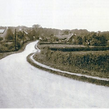
COLEORTON POTTERY OPENS
Coleorton Pottery opened at Lount but within Coleorton Parish boundary.

1707

1884
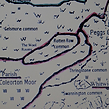
ROTTEN ROW TRANSFERS TO COLEORTON PARISH
Rotten Row, formerly in the parish of Thringstone, becomes part of Coleorton Parish
1947 - 1960
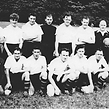
COLEORTON ROVER'S FOOTBALL TEAM ESTABLISHED
Coleorton Rovers played in the First Division of the Coalville Amateur & District Football League and achieved a notable standard, being runners up in the league on at least five occasions.